Currently Brewing
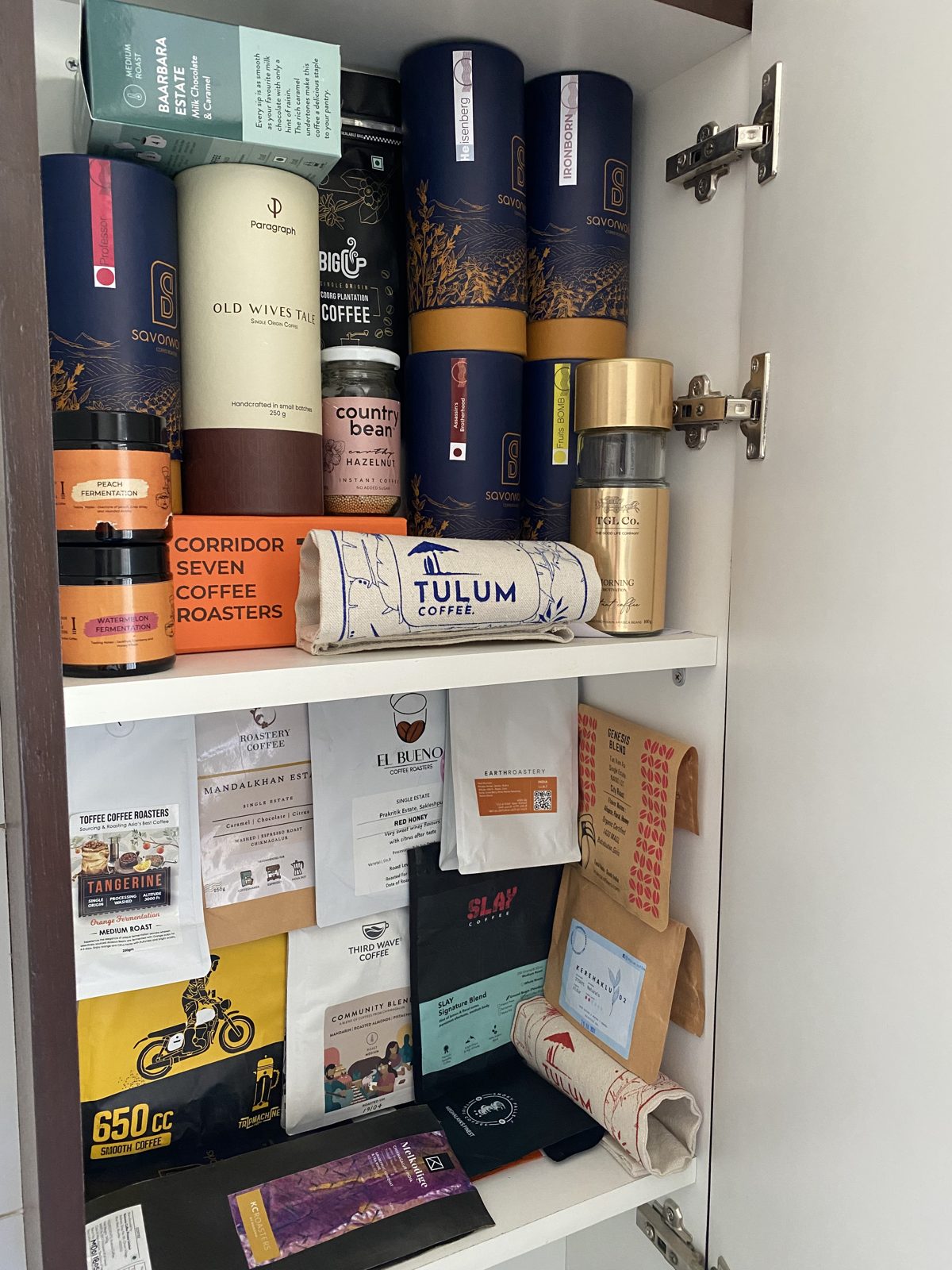
Coffee, literally. About fifty roasters so far, mostly Indian, mostly single origin. The log is below, followed by how it gets brewed.
This month: GB Roasters' Excelsa from Bella Bean Farm. Not arabica, not robusta: a light-roast anaerobic natural that tastes of tropical fruit and caramel.
| Roaster | Coffee | Notes | Reorder? |
|---|---|---|---|
| GB Roasters | Excelsa, Bella Bean Farm. Sequential anaerobic natural, light roast, ~1,200 m, 2026 crop | Fruity, caramel, tropical. 8.8 on a pourover (300 ml, 200°F, 6 pours, metal filter) | Yes |
| Genetics Coffee Roasters | Mohabbat. Medium roast, single origin | Dried fig, prunes, dried berries. Silky | |
| Savorworks | Professor, Heisenberg, Ironborn, Assassin's Brotherhood, Fruits Bomb | ||
| Corridor Seven, Nagpur | Peach Fermentation, Watermelon Fermentation |
What single origin means
A bag labelled single origin holds coffee from one place: one country at the very least, and in the better bags one region, one estate, sometimes one lot picked in a single week. A blend mixes beans from several places to hit a flavour that stays the same from bag to bag, which is what a café chain wants.
Single origin gives up that consistency to keep what makes the place distinct. The same arabica variety grown at 1,200 metres in Chikmagalur and at 1,600 metres in the Nilgiris tastes noticeably different, and how the cherries are processed changes it again. A washed coffee, where the fruit is stripped off before drying, tends to taste clean and bright. A natural, dried with the fruit still on, tends to taste of berries and jam. That’s why the log lists the farm and the process: they say more about what’s in the cup than the roaster’s name does.
Pour over
A pour over is hot water poured slowly by hand through a bed of ground coffee in a cone with a filter. It’s slower than a machine and less forgiving, and that’s the appeal: every variable is in plain sight and can be changed one at a time.
A typical cup here: 300 ml of water at about 93°C, a 45-second bloom (a first small pour that lets the fresh grounds release gas before the rest of the water goes in), then the rest in five or six pours, about three minutes in all. A metal filter lets more of the coffee’s oils through than paper does, so the cup comes out heavier and rounder. Paper gives a cleaner, lighter cup. Neither is wrong, and the difference is easy to taste with the same beans side by side.
The grinder matters more than the beans
This is the upgrade that changes the most, and it’s the one most people skip. A cheap blade grinder smashes beans into a mix of dust and chunks. In a pour over, the dust over-extracts and turns bitter while the chunks under-extract and taste sour, so the cup is both at once. No bean survives that.
A burr grinder cuts the beans between two metal burrs set a fixed distance apart, so the particles come out roughly the same size and the water extracts them evenly. The first cup from a decent burr grinder, with beans that tasted flat before, is usually the moment people realise the beans were never the problem.
Any roaster, as long as it’s fresh
The brand matters less than the date on the bag. Roasted coffee loses most of what makes it interesting within a few weeks of roasting, so a bag with a roast date from last month beats a famous name with no date on it at all.
Fresh doesn’t mean the same day, though. Beans keep releasing carbon dioxide for days after roasting, and brewing them too early gives a gassy, uneven cup. Light roasts usually taste best after resting for one to two weeks, then hold up for another few weeks after that. Buying smaller bags more often, from roasters who print the roast date, gets most of the way there.
Where to look next
The most useful place to follow Indian specialty coffee is r/IndiaCoffee on Reddit: new roasters, honest reviews, grinder advice, and people comparing notes on the same bag.